.png)
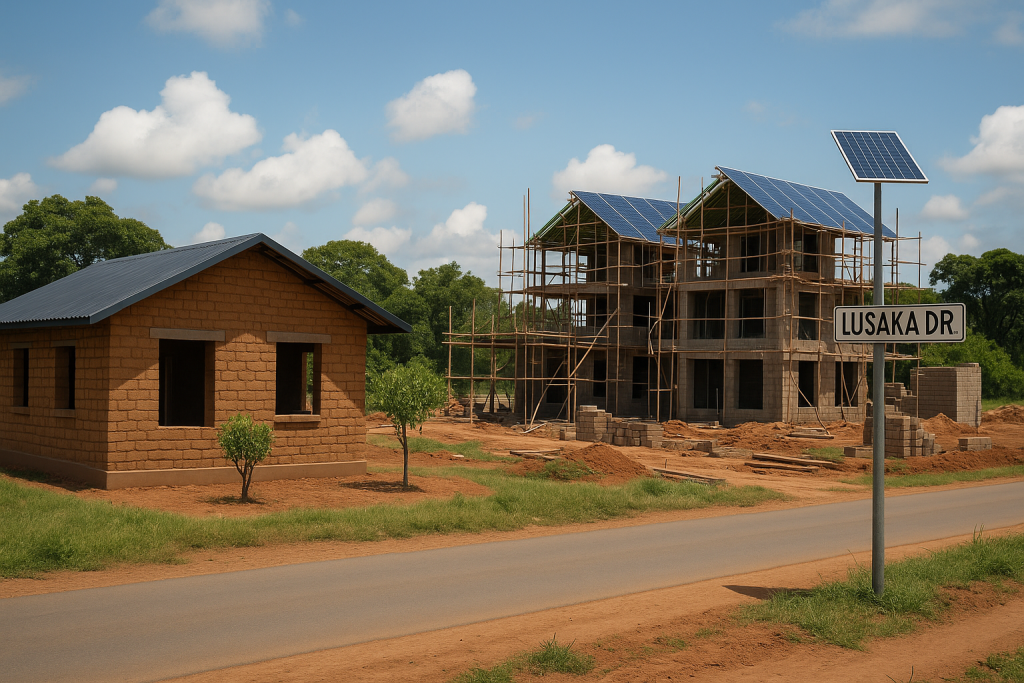
Zambia is fast becoming a hotbed for sustainable development, and real estate is at the center of this transformation. As the country implements the Eighth National Development Plan (8NDP) and strengthens climate legislation, foreign real estate developers must prepare for one unavoidable reality: environmental compliance is no longer optional.
From 2022 to 2026, Zambia is aligning its infrastructure development with international climate goals, new green economy policies, and stricter regulatory enforcement. For foreign investors, this is both a challenge—and an opportunity to lead Zambia’s green building future.
Zambia’s Green Development Agenda: What’s Driving the Shift?
A New National Direction
The 8NDP (2022–2026) identifies environmental sustainability as one of Zambia’s four strategic priorities. This includes transitioning to a “green and resource-efficient economy,” where construction and infrastructure must meet new climate-resilient standards.
The plan mandates that all development projects incorporate climate mitigation and adaptation strategies. For foreign developers, this means aligning your projects with Zambia’s low-carbon goals from day one.
ZEMA and the Law
The Zambia Environmental Management Agency (ZEMA) enforces environmental compliance under the Environmental Management Act No. 12 of 2011. Before any construction can begin, developers must obtain Environmental Authorization. This process can include:
-
Environmental Impact Assessments (EIA)
-
Emission and Waste Management Licenses
-
Public consultations and scoping reports
-
Annual compliance reports and site audits
Projects that fail to comply risk suspension, fines, or permanent shutdown.
Climate Commitments That Impact Real Estate
Paris Agreement and Zambia’s Pledge
Zambia’s revised Nationally Determined Contributions (NDCs) aim to cut greenhouse gas emissions by up to 47% by 2030. This target is especially focused on the infrastructure sector, including buildings and real estate.
To meet these goals, Zambia launched an NDC Implementation Framework covering 11 sectors and requiring $17.2 billion in green investment. Real estate developers are now expected to adopt energy-efficient designs and climate-resilient infrastructure.
Energy Efficiency and Building Code Reform
Zambia is integrating energy conservation into its national building codes. This includes:
-
Mandatory solar energy integration
-
Insulation standards
-
Water efficiency systems (e.g., rainwater harvesting)
-
Green roofing and sustainable landscaping
The Ministry of Infrastructure, Housing, and Urban Development is also reviewing building policies to include low-emission construction guidelines.
What Compliance Looks Like: Step-by-Step for Developers
The EIA Process
-
Screening: Submit an Environmental Project Brief detailing your site plan, impact estimates, and mitigation strategies.
-
Scoping: Engage stakeholders through public consultations and draft your Terms of Reference.
-
Impact Study: Produce a full Environmental Impact Statement (EIS).
-
Approval: ZEMA has 30–40 days to make a final decision.
After Approval: Ongoing Requirements
-
Annual reports to ZEMA
-
Environmental audits 12–36 months post-completion
-
Continuous monitoring of emissions, waste, and water use
Failure to comply can lead to revocation of your license or legal action.
Green Building Opportunities: Turn Compliance into Competitive Advantage
Use of Local Materials
Zambian developers are increasingly turning to eco-friendly, locally sourced materials. These include:
-
Adobe bricks: Made of clay and straw, perfect for natural insulation.
-
Compressed Earth Blocks (CEBs): Durable and low-carbon.
-
Bamboo: Fast-growing, versatile, and renewable.
-
Recycled steel: Strong and sustainable for large structural needs.
Using local materials not only reduces emissions, but also supports Zambian communities.
Tech and Design Innovation
-
Solar panels for electricity and hot water
-
Vertical gardens and green roofs for cooling and biodiversity
-
Rainwater harvesting systems to conserve water
-
Smart meters for real-time energy monitoring
These features are increasingly viewed not as luxury add-ons, but as essential infrastructure for compliance and investment readiness.
Traditional Methods Meet Modern Design
Many traditional Zambian building methods are inherently sustainable. Blending them with modern architecture can result in structures that are cost-effective, culturally relevant, and environmentally sound.
The Business Case: Why Green Compliance Pays
Green Jobs and Local Partnerships
Between 2013 and 2018, Zambia’s Green Jobs Programme created over 2,600 full-time jobs and upgraded working conditions for thousands more. Developers who embrace sustainability can create employment, gain public support, and contribute to long-term skills transfer.
Partnering with local institutions like the University of Zambia and CEEEZ can also help ensure your team is fully prepared for regulatory expectations.
Access to Climate Finance and Carbon Markets
Developers that meet Zambia’s environmental thresholds may be eligible for:
-
Climate finance grants
-
Carbon credit revenue
-
Public-private partnership incentives
-
Priority access to government land or infrastructure
What’s Coming: Future Legal Changes to Watch
Green Economy and Climate Change Bill (2024)
This upcoming bill will bring Zambia into full compliance with the Paris Agreement. It introduces:
-
Mandatory National Adaptation Plans
-
Sector-based mitigation targets
-
Five-year compliance reviews
This means developers may soon face even tighter controls and monitoring requirements.
Monitoring and Performance Tracking
ZEMA is expanding its Measuring, Reporting and Verification (MRV) systems. This includes key performance indicators for emissions, water use, energy efficiency, and waste. Developers should expect real-time audits and performance benchmarking by 2026.
Conclusion: A Deadline with a Hidden Opportunity
The 2026 environmental compliance deadline is more than a regulation—it’s a turning point for Zambia’s real estate sector.
Foreign developers who act now can gain first-mover advantage, qualify for financial incentives, and shape the future of sustainable construction in Zambia. But those who delay risk falling behind—and possibly losing their investment altogether.