.png)
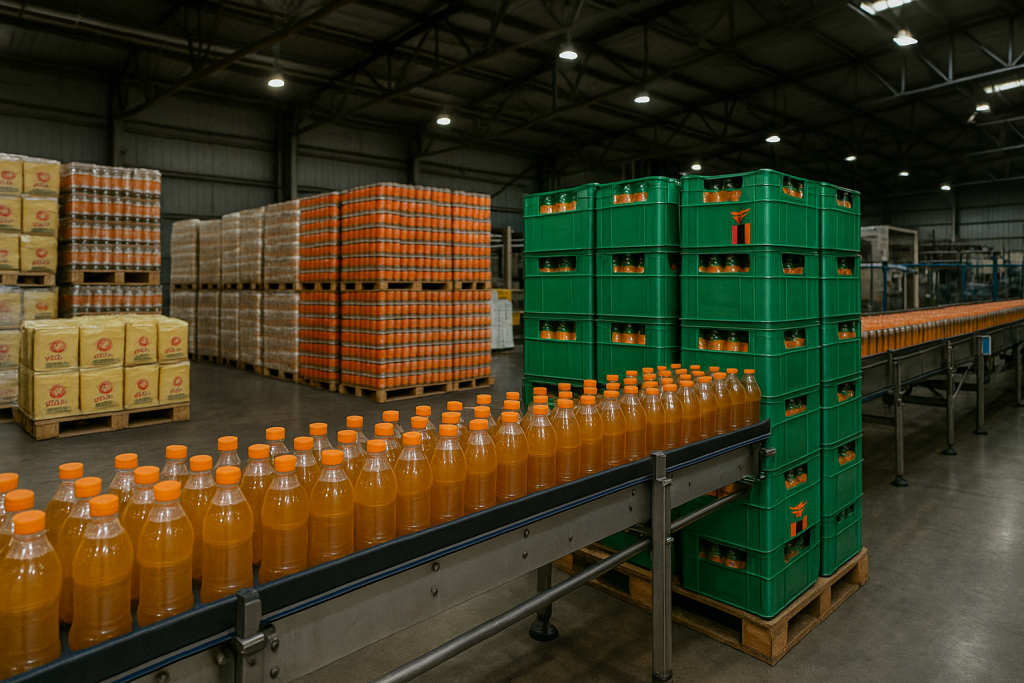
Zambia’s packaged-foods and beverage landscape is changing fast. Urbanization, rising disposable incomes, and busier lifestyles are driving a taste for healthy, convenient products—yet local manufacturing and packaging capacity still lags behind demand. For well-capitalized foreign investors, 2025 presents a window to build brands, factories, and supply chains that can outpace slower local rivals while exporting across SADC and COMESA.
1. Market Outlook for 2025
-
Market size: Zambia’s overall food market should hit US $4.84 billion in 2025, expanding about 8.5 % annually.
-
Convenience surge: Ready-to-eat and grab-and-go meals alone are forecast to generate roughly US $280 million in 2025, with near-double-digit growth through 2030.
-
Consumer shifts: Shoppers increasingly look for organic, low-sugar, plant-based, and locally sourced options as health consciousness rises.
These numbers reveal headroom for modern, value-added products that meet premium tastes without sacrificing affordability.
2. Why Zambia Is Ripe for Packaged-Food Investment
Strategic location. Situated at the heart of southern Africa, Zambia enjoys duty-free or preferential access to SADC and COMESA—a combined market of 600 million people—making Lusaka a natural export springboard.
Government incentives. Under the Investment, Trade & Business Development Act (2022) and Multi-Facility Economic Zones (MFEZ) program, qualifying investors access tax holidays, customs-duty waivers on machinery, and accelerated capital-allowance write-offs.
Under-developed supply chain. Local processors struggle with outdated equipment, fragmented cold-chain logistics, and imported packaging. An investor who installs modern lines and vertically integrates packaging can leapfrog inefficiencies and lock in margins.
3. Seize the Health & Convenience Boom
3.1 Product Ideas Aligned with Demand
| Opportunity | Why It Fits Zambia 2025 | Quick Launch Tip | | Organic snack bars & nuts | Health-driven urban millennials lack time to cook but want clean labels. | Source peanuts, sunflower seeds, and honey locally to cut costs. | | Plant-based protein meals | Flexitarian diets are trending; meat prices remain volatile. | Partner with soya and bean co-ops for raw material contracts. | | Functional beverages (vitamin-infused water, kombucha) | High bottled-water penetration creates familiarity; consumers crave differentiation. | Use return-able glass to reduce packaging duty and appeal to eco-minded buyers. | | Ready meal kits | Growing middle-class parents balance work and family. | Bundle staples (nyama + nshima) with microwavable pouches for 10-minute prep. |
3.2 Branding Essentials
-
Highlight provenance. Zambian consumers reward brands that trumpet local ingredients (“Made in Zambia with Copperbelt maize”).
-
Keep labels bilingual. English drives aspirational appeal; major local languages (Bemba, Nyanja) build trust.
-
Certifications count. Obtain HACCP, ISO 22000, and when exporting, SADC food-safety marks to unlock supermarket shelf space.
4. Fix the Packaging Gap
Packaging remains the single biggest cost pain-point for domestic food processors—most high-barrier films and specialty cartons are still imported from South Africa or China. Foreign investors can:
-
Establish in-country extrusion and printing plants for moisture- and oxygen-barrier pouches, PET pre-forms, and corrugated cases.
-
Supply both captive brands and third-party Zambian SMEs, generating dual revenue streams.
-
Leverage BOZ and IDC financing windows created for SME supply-chain development to lower borrowing rates.
5. Build Local, Export Regionally
-
Site factories near railheads. The Lusaka Multi-Facility Economic Zone connects to the TAZARA rail line, slashing transport to Dar-es-Salaam for export shipping.
-
Use bonded warehouses. Maintain bonded inventory in Ndola (Copperbelt) for direct delivery into DRC’s booming mining towns.
-
Adopt SAP, Odoo, or similar ERP from day one to integrate procurement, production, and customs documentation—critical for smooth SADC rules-of-origin audits.
6. Navigate Costs, Quality & Infrastructure
| Challenge | Practical Mitigation | | High electricity tariffs | Install rooftop solar + battery storage; recoup in ≤4 years via tax incentives. | | Inconsistent cold chain | Deploy mobile, solar-powered cold rooms at rural aggregation hubs for dairy and produce. | | Quality-control gaps | Implement real-time IoT sensors on lines; train staff under ISO-aligned SOPs to minimize recalls. | | Skill shortages | Sponsor vocational programs at TEVETA institutions; bond graduates for three years. |
7. Six-Step Action Plan for Market Entry
-
Conduct a 90-day feasibility study focusing on raw-material availability, retail pricing corridors, and competitor gaps.
-
Secure fiscal incentives early—register under ZDA as a “priority sector” manufacturer to access zero customs duty on plant and equipment.
-
Form joint ventures with local agribusiness co-ops to guarantee feedstock and lock in goodwill.
-
Build a modular plant that can scale from 5 t/day to 20 t/day without shutting down operations.
-
Launch with two hero SKUs (e.g., organic peanut butter and vitamin-water) to establish brand recognition before line-extension.
-
Roll out omni-channel distribution: supermarket chains (Shoprite, Pick n Pay), fuel-station forecourts, on-demand apps like Tigmoo Eats.
8. Conclusion
Zambia’s packaged-foods and beverage arena in 2025 is defined by rapid demand growth, an under-served health-conscious consumer, and acute packaging shortfalls. Foreign investors who combine product innovation, local manufacturing, and regional export vision can secure first-mover advantage—transforming Zambia into both a thriving domestic market and a regional production hub.