.png)
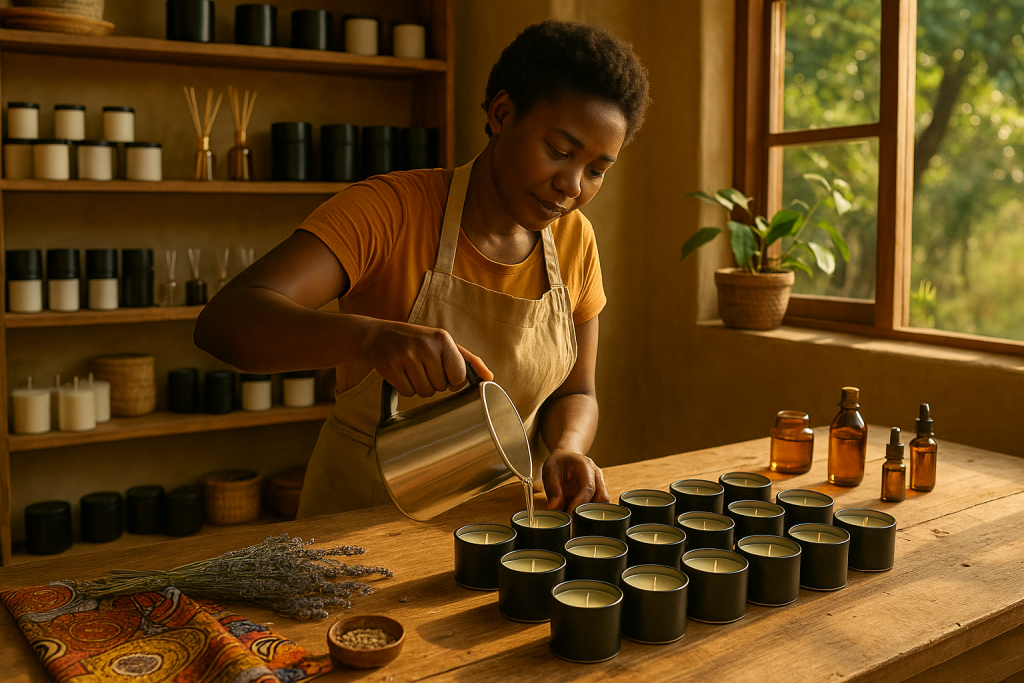
The custom candle business in Zambia is lighting up fast. A rising middle class, growing e-commerce adoption, and an appetite for unique home-fragrance items have created a golden window for creators who can blend art with aroma. This 2025 guide walks you—step by step—through market research, legal compliance, branding, and launch strategies so you can turn molten wax into molten profits.
Conduct Market Research
Before you melt a single block of wax, study the Zambian candle and fragrance landscape:
-
Segment demand. Most sales occur in Lusaka and Copperbelt, but premium eco-soy candles are trending among millennial buyers nationwide.
-
Check scent preferences. Vanilla, lavender, and lemongrass lead searches, yet locally inspired scents—think Mongu mango or Mpika cinnamon—command higher margins.
-
Spy on competitors. Price, packaging, and retail locations reveal gaps you can fill with custom shapes, reusable containers, or socially responsible sourcing.
Spend a weekend at Sunday Market, scan Facebook Marketplace listings, and talk to interior-decor boutiques. The insights will sharpen your unique selling proposition (USP).
Craft a Business Plan
A solid plan turns ideas into bankable targets:
-
Mission & Goals. Aim to hit ZMW 10,000 monthly recurring revenue by month seven.
-
Product Range. Start with three core candle sizes plus two complementary items—room sprays and reed diffusers.
-
Cost & Pricing. Budget roughly ZMW 6 per gram of premium soy wax and mark up finished candles at 3× cost to cover labor and marketing.
-
Sales Channels. Prioritize online direct-to-consumer sales for the first three months, then add pop-up stalls and wholesale partners.
-
Financial Projections. Include cash-flow forecasts, breakeven analysis, and material reorder points.
Review the plan every quarter. Adjust it as you collect real sales data and customer feedback.
Register and Comply With Zambian Regulations
Operating legally builds trust and shields you from penalties:
| Step | Authority | Key Documents | | Reserve business name | PACRA | Name Clearance form | | Incorporate entity | PACRA | Certificate of Incorporation | | Tax registration | ZRA | TPIN; VAT if turnover > ZMW 800,000 | | Product safety & labeling | ZCSA | Optional, but recommended for exporters | | Insurance | Private insurer | Public & product liability policies |
Label every candle with weight, burn time, safety icons, allergen disclosures, and batch codes. Clear labels lower refund risk and reassure stockists.
Source Materials and Build Local Supply Chains
Reliable inputs keep production flowing:
-
Wax. Import 100% soy or palm-free blends in 25 kg bags, or buy paraffin locally for entry-level lines.
-
Wicks. Stock cotton and wooden crackle wicks for variety.
-
Fragrance oils. Choose cosmetic-grade oils that meet IFRA standards.
-
Containers. Repurpose Zambian clay pots for a locally rooted brand aesthetic.
-
Packaging. Invest in sturdy, recyclable cartons; fragile glass costs you in returns if packed poorly.
Negotiate bulk discounts and request Certificates of Analysis to verify quality.
Design and Test Your Product Line
Great candles blend scent throw, burn safety, and stunning looks:
-
Prototype. Use 10 cm tins for test batches—cheaper and faster to tweak.
-
Burn tests. Track melt pool diameter, smoke, and wick mushrooming over three consecutive burns.
-
Scent load. Start with a 6 % fragrance load; adjust up to 10 % for soy wax.
-
Compliance. Record all formulas in a simple spreadsheet—wax type, oil percentage, color, burn result. Consistent quality builds repeat sales.
Build Your Brand and Packaging
Branding converts casual sniffers into loyal fans:
-
Name & Logo. Pick a memorable, pronounceable name (e.g., “Lumina Zed”).
-
Story. Tie each fragrance to a local tale: “Victoria Falls Mist” evokes adventure.
-
Eco pledge. Offer a ZMW 5 refill discount when customers return empty jars.
-
Visual identity. Use earthy palettes and minimal fonts to signal sustainable luxury.
Well-designed packaging commands shelf space and share-worthy photos.
Set Up Multi-Channel Sales
Diverse channels equal stable revenue:
-
E-commerce site. A Shopify Lite plan costs under ZMW 300 per month and syncs with Insta-Shop.
-
Social commerce. Run timed Instagram drops with limited-edition scents.
-
Craft fairs & malls. Booth fees range from ZMW 200 to 1,000 per weekend—perfect for real-time customer feedback.
-
Wholesale. Pitch curated gift stores and spa resorts; offer 40 % margins on retail price.
Use order-management software to prevent stock-outs during festive rushes.
Market Like a Pro
Marketing is half the game—light up attention with these tactics:
-
Content marketing. Post “care tips” reels (trim wicks, even burn) to build authority.
-
Influencer gifting. Partner with lifestyle bloggers; a single post can spike traffic by 25 %.
-
Email drip. Offer a free “Scent Pairing Guide” PDF for sign-ups, then nurture subscribers with behind-the-scenes stories and flash sales.
-
Pop-up experiences. Host “Blend-Your-Own Candle” workshops; attendees often spend 2× the ticket price on take-home products.
Track metrics—cost per acquisition, repeat purchase rate—and double down on the highest-ROI channels.
Launch, Monitor, and Scale
Execute a soft launch first:
-
Beta sale. Offer friends and early followers a 20 % discount in exchange for honest reviews.
-
Gather data. Use a simple Google Form to collect ratings on scent strength, burn time, and packaging appeal.
-
Iterate fast. Swap under-performing fragrances or adjust wick sizes within two production cycles.
-
Scale smart. Once monthly orders exceed your kitchen capacity, outsource pouring to a contract manufacturer or invest in a 50-liter melter.
Revisit your plan every six months—growth rarely follows a straight line, so flexibility keeps you profitable.
Conclusion
Launching a custom candle and scented products business in Zambia demands more than artistic flair. When you pair thorough research with airtight compliance, quality sourcing, and savvy marketing, you kindle a brand that glows long after the first light. Start small, learn fast, and let every fragrance tell a uniquely Zambian story.