.png)
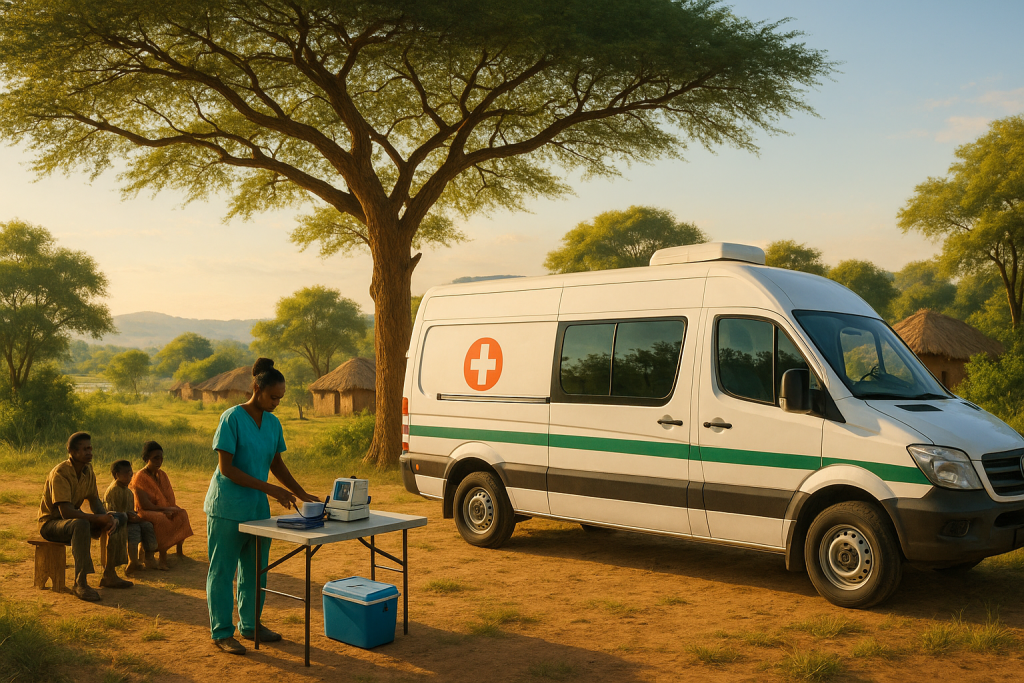
Zambia’s push for Universal Health Coverage, coupled with long travel times to fixed clinics, has created a real need for high-quality mobile health screening. If you own a medical background—or simply see a business opportunity—you can bridge that gap, earn revenue, and make a measurable public-health impact.
Below is a practical, SEO-optimised roadmap that walks you from idea to fully licensed operation, plus marketing tips to keep your service sustainable.
Why Mobile Screening Matters in 2025
-
Unmet demand: Rural and peri-urban communities still face a >10 km average trip to the nearest clinic.
-
NCD surge: Hypertension and diabetes rates are climbing; early detection saves lives and money.
-
Corporate wellness: Mining, agro-processing, and logistics firms now budget for on-site check-ups to cut downtime.
-
Government support: The Ministry of Health actively encourages PPPs (public-private partnerships) that extend screening to underserved areas.
Because of these factors, a well-run mobile clinic can secure government referrals, NGO grants, and private retainers within its first year.
Step 1. Secure Licensing & Accreditation
| Requirement | Fee (Zambian Citizens) | Fee (Non-Citizens) | Authority | | HPCZ Application Fee | K450 | K450 | Health Professions Council of Zambia | | Mobile Facility Licence | K9,260 | K12,970 | HPCZ | | Professional Registration (per clinician) | K1,500 avg. | — | HPCZ/Medical Council | | Vehicle Roadworthiness | Varies | Varies | RTSA |
Choose the mobile-facility type (road, water, air, tele-platform).
-
Submit the HPCZ application, including floor plan of the van/truck, equipment list, and staff CVs.
-
Once the provisional licence is issued, undergo an on-site inspection within 90 days.
-
Register each clinician with their respective professional council before service launch.
Tip: Begin the paperwork 3–4 months before your intended launch date; inspection slots fill quickly.
Step 2. Define Your Service Package
Common Screening Bundles
| Package | Tests Included | Ideal Clients | | Essential NCD | BMI, BP, Random Blood Sugar, Cholesterol | Corporate wellness days | | Comprehensive Communicable | HIV, Malaria RDT, Syphilis, Hep B | Rural outreach & NGO projects | | Maternal & Child | ANC profile, Rapid HIV, Haemoglobin, Growth Monitoring | District health campaigns |
When selecting tests, balance public-health need, profit margin, and logistics (cold-chain, reagent shelf life, etc.). Many operators start with an Essential NCD package and add communicable-disease testing once systems stabilise.
Step 3. Build a Qualified, Motivated Team
| Role | Minimum Qualification | Head-count | | Medical/Clinical Officer | MBChB + HPCZ licence | 1 | | Registered Nurse | Diploma + Nursing Council licence | 2 | | Pharmacy Technologist | Diploma + ZPA registration | 1 | | Data Clerk / Field Assistant | Certificate in ICT or Public Health | 1 |
Train all staff on Zambia’s SmartCare or DHIS2 data modules.
-
Cross-train nurses in phlebotomy and counselling to keep staffing lean on low-volume days.
-
Use community volunteers to handle crowd control, translate local languages, and boost trust.
Step 4. Acquire & Fit Out Your Mobile Unit
-
Vehicle: High-roof panel van or 4×4 truck with ≥3 kVA inverter.
-
Interior layout: Registration desk, screening bay, sample-handling counter, cold-chain fridge.
-
Equipment basics: Glucometers, BP monitors, rapid-test cassettes, autoclave, waste-segregation bins.
-
ICT kit: Tablets with 4G SIMs, barcode label printer, solar power bank.
-
Branding: Apply reflective decals and your HPCZ licence number for credibility and night visibility.
Budget US $35k–55k for a fully equipped second-hand van; leasing is an option if capital is tight.
Step 5. Forge Partnerships & Funding Streams
-
Ministry of Health: Sign an MoU for patient referrals and data exchange.
-
District Health Offices: Coordinate outreach calendars to avoid duplication.
-
Corporate CSR teams: Offer retainer packages (e.g., quarterly wellness days).
-
NGOs/Donors: Pitch results-based financing proposals; mobile TB and HIV screening remain donor priorities.
-
Micro-insurance providers: Bundle annual check-ups into their policies.
Step 6. Operational Planning & Data Management
| Activity | Best Practice | | Route Scheduling | Map clusters within a 30 km radius per day to cut fuel costs. | | Inventory Control | Maintain a minimum 2-week buffer stock; automate alerts via free DHIS2 Tracker. | | Digital Records | Upload to SmartCare nightly; use offline mode where network is weak. | | Quality Assurance | Run control samples daily and document in a logbook for HPCZ audits. |
Remember to plan recurring expenses: fuel, reagent restocking, PPE, staff allowances, vehicle service, and data bundles.
Step 7. Monitor, Evaluate, Improve
-
Key Metrics – clients screened, positive-case yield, referral uptake, cost per client.
-
Monthly Data Review – share a dashboard with partners and tweak route plans accordingly.
-
Community Feedback – use SMS surveys after visits; positive testimonials double as marketing content.
-
Annual Licence Renewal – submit service reports and evidence of continuous professional development (CPD) for all staff.
Common Pitfalls (and How to Avoid Them)
| Pitfall | Prevention Strategy | | Licence delay | Submit complete, clearly labelled documents; follow up weekly. | | Cold-chain breakdown | Install dual power sources (inverter + solar) and temperature loggers. | | Low turnout | Conduct pre-visit radio spots and leverage local health committees. | | Data backlog | Simplify forms; use dropdowns and automate totals. |
Budget Snapshot (First-Year, Single-Unit Model)
| Expense Category | ZMW | Notes | | Vehicle purchase & fit-out | 1,200,000 | Good 2-hand Sprinter; includes inverter | | Licensing & regulatory fees | 30,000 | HPCZ facility & staff | | Start-up supplies & kits | 250,000 | 3-month buffer | | Staff salaries (12 mo.) | 850,000 | Basic salaries + allowances | | Fuel & maintenance | 300,000 | 5 outreach trips/week | | Marketing & community mobilisation | 60,000 | Radio, fliers, social media | | Total | ≈ 2.69 million ZMW | ~US $115k |
Costs drop 15–20 % in Year 2 once capital items are paid off.
Conclusion
Launching a Mobile Health Screening Service in Zambia is both a business and a public-health win. By ticking the regulatory boxes, offering a well-chosen screening package, and harnessing digital tools, you’ll deliver life-saving diagnostics exactly where they’re needed—while securing diverse revenue streams.
Ready to roll? Your licence application is Step One—start it today, and Zambia’s roads could be your clinic corridors in as little as 90 days.