.png)
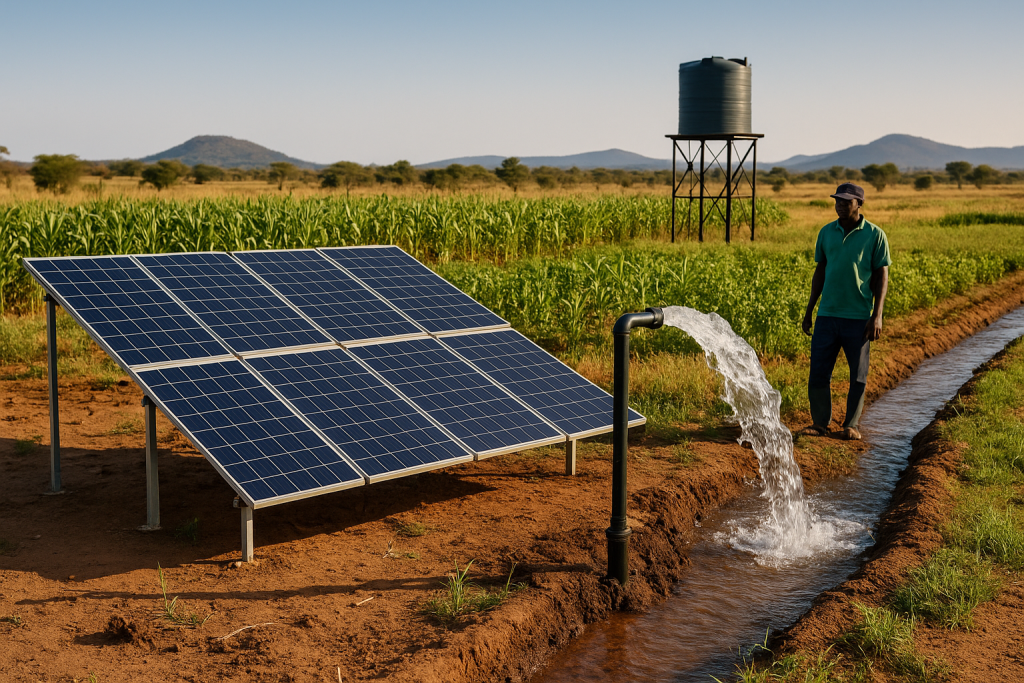
Solar water pump installation business in rural Zambia is a mouthful, but it captures one of the most promising clean-energy niches in the country today. Climate-driven droughts, rising diesel costs, and a government push for 51 % rural electrification by 2030 have created a perfect storm of opportunity. This guide shows you—step by step—how to turn that opportunity into a profitable, impact-driven venture.
1. Why Rural Zambia Needs Solar Pumps — Right Now
-
Water insecurity bites hardest in farming districts. Southern, Eastern, and parts of Central Province have recorded up to 60 % crop losses during prolonged dry spells.
-
Diesel pumps drain profits. Fuel price spikes add up to ZMW 1,800 per hectare each season, eating into already-thin margins.
-
Policy winds at your back. VAT and duty exemptions on solar gear and grants like the Beyond the Grid Fund lower start-up costs dramatically.
If you can supply reliable solar pumping systems, train clients, and secure affordable financing, the market is yours to claim.
2. Nail the Legal & Regulatory Foundations
| Requirement | Authority | Key Actions | Typical Timeline | | Business registration | PACRA | Reserve name, incorporate company | 3–5 days | | Tax compliance | ZRA | Get TPIN; register for VAT when turnover > ZMW 800 k | Same day | | Solar energy license | ERB | Apply under “Solar Import & Installation” category; show quality-control plan | 4–6 weeks | | Import conformity | ZCSA & Customs | Present test certificates for panels, pumps, batteries | At port of entry |
Tip: Submit your ERB application and PACRA documents simultaneously. Overlapping the two timelines shaves a month off your launch date.
3. Source Equipment & Forge Strategic Partnerships
-
Tier-one suppliers. Davis & Shirtliff and Finecop Global stock proven submersible and surface pumps ranging from 0.5 hp to 5 hp.
-
Specialised OEMs. Futurepump’s SF2 delivers 1,600 L/hr on just 120 W—perfect for smallholders.
-
Bundled solutions. Partner with agro-dealers to co-package pumps, drip kits, and seeds for a “farm-in-a-box” offer.
-
Quality assurance. Always request IEC- or ISO-certified panels, stainless-steel pump casings, and MPPT controllers. It keeps warranty claims low and your reputation high.
4. Finance the Deal: Grants, Credit, and Pay-As-You-Go
| Funding Tool | How It Works | Why It Matters | | Rural Electrification Fund (REF) | Grants 20–40 % of project CAPEX in underserved districts | Lowers end-user price | | Beyond the Grid Fund | Performance-based grants for expanding rural energy access | Rewards rapid customer uptake | | Rent-to-own (RTO) | Client pays 10 % deposit, then weekly instalments via mobile money | 97 % repayment rate in pilot trials | | Carbon finance | Sell CO₂ offsets from diesel-replacement pumps on voluntary markets | Extra ZMW 500–700 per unit over five years |
Bundle two or more mechanisms to keep cash flowing and customers on schedule.
5. Skills, Training & Bullet-Proof After-Sales Support
-
Upskill your crew. A two-week course at the University of Zambia’s Renewable Energy Centre covers sizing, installation, and troubleshooting.
-
Client education. A laminated “How to Clean Your PV Panel” card cuts half the service calls.
-
Remote support. WhatsApp video diagnostics resolve 40 % of issues without field visits.
-
Spare-parts cache. Stock extra controllers and impellers in provincial hubs to slash downtime during peak irrigation periods.
Remember: reliable service converts first-time buyers into your best salespeople.
6. Go-to-Market Strategy: From Demo Plots to Digital Leads
a. Demonstration Farms
Set up a 0.5-hectare plot near a busy feeder road. Show farmers how solar pumps drive drip irrigation that triples tomato yields. Nothing sells like visible success.
b. Influencer Agronomists
Partner with respected extension officers. Their endorsement carries weight and accelerates adoption.
c. Mobile-first Marketing
Rural farmers live on WhatsApp and Facebook Lite. Post short reels showing side-by-side fuel-versus-solar cost comparisons.
d. Seasonal Promotions
Offer “planting-season” discounts in September and “livestock-watering” bundles in April. Timed offers spur quick decisions.
7. Build for Sustainability and Scale
-
Groundwater stewardship. Install simple flow meters and train clients to track daily extraction. Sustainable use ensures long-term pump sales.
-
Data analytics. A cloud dashboard monitoring runtime hours helps you predict filter-replacement cycles—and sell service plans proactively.
-
Expand horizontally. Once you hit 300 installed pumps, add solar cold-storage systems or mini-grids to serve the same customers.
8. Twelve-Week Action Plan
| Week | Milestone | Deliverable | | 1–2 | Register company | PACRA certificate | | 3–4 | Submit ERB license application | Receipt & application ID | | 5–6 | Finalise supplier contracts | MOUs and price lists | | 7 | Secure REF or grant pre-approval | Letter of intent | | 8–9 | Import first demo kit | Panels, pump, controller on-site | | 10 | Set up demo farm & film content | 3-minute explainer video | | 11 | Launch social-media ads & field days | 50 qualified leads | | 12 | Close first 10 sales | Signed RTO agreements |
Hit each checkpoint, and you’ll move from paperwork to paying customers in just three months.
Conclusion
Starting a solar water pump installation business in rural Zambia is more than a commercial venture—it’s a lifeline for farmers battling water scarcity and diesel volatility. By securing the right licenses, forging supply and finance partnerships, and investing in customer support, you can create a resilient enterprise that powers livelihoods and profits alike. The sun is free; let it fund your future.