.png)
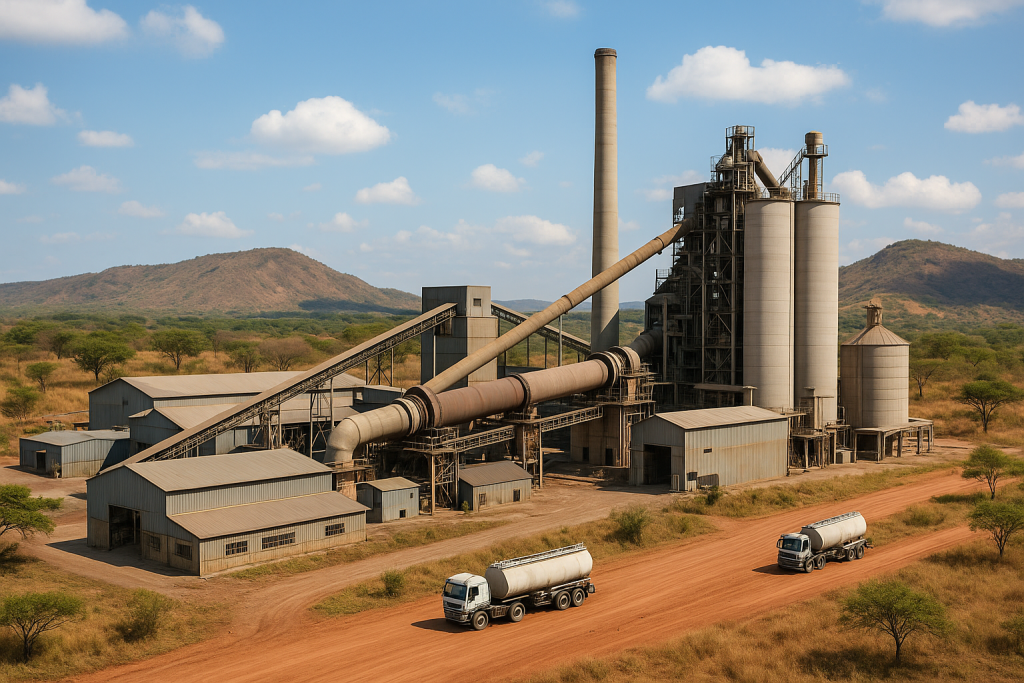
Thinking of building a foreign-owned cement manufacturing plant in Zambia? You are eyeing one of Southern Africa’s most attractive industrial plays. Zambia offers generous fiscal incentives, streamlined company registration, abundant limestone, and direct routes to growing SADC markets. This guide walks you through every major step—legal, environmental, financial, and logistical—so you launch faster and profit sooner.
Why Zambia’s Cement Market Still Holds Promise
-
Strong domestic demand. Public-sector road, rail, and housing projects continue to absorb clinker despite recent overcapacity.
-
Regional export upside. Zambia borders eight countries, giving producers duty-free access to 350 million SADC consumers.
-
Tax-friendly policies. Multi-Facility Economic Zones (MFEZs) slash corporate income tax to 0 % for the first 10 years.
-
Stable raw-material supply. Limestone belts around Ndola and Mpande provide decades of quarry life.
Getting Your Company Registered Fast
-
Name clearance at PACRA. Reserve a unique company name online in 24 hours.
-
Incorporation. File Form 2 with director IDs and share capital. At least half of your directors must live in Zambia.
-
ZDA investment licence. Commit ≥ US$1 million to qualify for 100 % foreign ownership and automatic work-permit support.
-
Tax numbers. Register for TPIN, VAT, and customs within five working days.
-
Employment permits. Apply early; the Department of Immigration now approves technical managers in 21 days when all paperwork is complete.
Tip: Many investors appoint a reputable Zambian resident director to speed up local banking and utility connections.
Meeting Environmental Rules Without Delays
Zambia’s Environmental Management Act (EMA 2011) is clear and predictable if you plan ahead.
Step-by-Step
-
Environmental Project Brief (EPB). Submit your project outline to ZEMA; receive a screening decision in 40 days.
-
Full Environmental Impact Statement (EIS). If required, cover raw-material sourcing, emissions, resettlement, and mitigation.
-
Public consultation. Hold at least two community meetings; document concerns and your responses.
-
Licence issuance. ZEMA grants a three-year operational licence with specific emission standards. Renew on schedule to avoid penalties.
Best practices
-
Adopt bag filters or electrostatic precipitators to cut dust by 99 %.
-
Where possible, source waste-heat for power to lower your carbon footprint and energy bill.
-
Set up a community grievance hotline early. Transparent communication prevents costly stoppages.
Tax Incentives You Can Actually Bank On
| Incentive | Benefit | Conditions | | MFEZ corporate tax holiday | 0 % CIT for 10 years, then 50 % for years 11-13 | Invest ≥ US$500 000 in an approved zone | | Customs duty on plant & machinery | 0 % for five years | Goods classified as industrial capital equipment | | Accelerated depreciation | 50-100 % write-off in year 1 | Applies to manufacturing equipment | | Export profit exemption | 0 % tax on profits shipped outside Zambia for 10 years | Plant must earn ≥ 70 % revenue from exports |
Building a Reliable Raw-Material & Distribution Chain
-
Limestone. Negotiate a quarry lease near Ndola or Chongwe; trucking distance under 60 km keeps costs down.
-
Gypsum. Secure a long-term supply contract with Kemcore Zambia (100 k t/year capacity).
-
Power. Budget for a 20 MW line or embed a 10 MW captive solar-diesel hybrid to hedge outages.
-
Transport. Use the Lobito Corridor rail link for bulk exports to Angola’s port, and the Kazungula OSBP for deliveries to Botswana and South Africa.
-
Spare parts. Map out OEM support in Lusaka or Johannesburg; keep critical bearings and gearboxes in country.
Phased Roadmap for Your Foreign-Owned Cement Manufacturing Plant in Zambia
Phase 1 – Approvals (0-6 months)
-
Complete incorporation, ZDA licence, and EPB.
-
Negotiate land and mining rights.
Phase 2 – Construction (7-24 months)
-
Mobilise EPC contractor.
-
Pour kiln foundation by month 10; erect preheater tower by month 18.
-
Run cold commissioning at month 22.
Phase 3 – Ramp-Up (25-36 months)
-
Produce first clinker.
-
Achieve 80 % design capacity in six months.
-
Finalise ISO 14001 certification to strengthen export credibility.
Common Pitfalls and How to Avoid Them
-
Ignoring overcapacity warnings. Model export sales from day one; domestic demand alone may not fill your kiln.
-
Under-budgeting for power. Grid reliability fluctuates—install backup or lose production days.
-
Late stakeholder engagement. Protests over dust or resettlement can halt earthworks. Consult early.
-
Thin working capital. Customs delays can trap spares at borders; keep at least three months’ cash cover.
Conclusion
Launching a foreign-owned cement manufacturing plant in Zambia demands careful sequencing—but the rewards are substantial. With tax holidays, abundant raw materials, and easy access to SADC markets, investors who plan diligently can pour their first bag of clinker within three years and scale profitably thereafter.