.png)
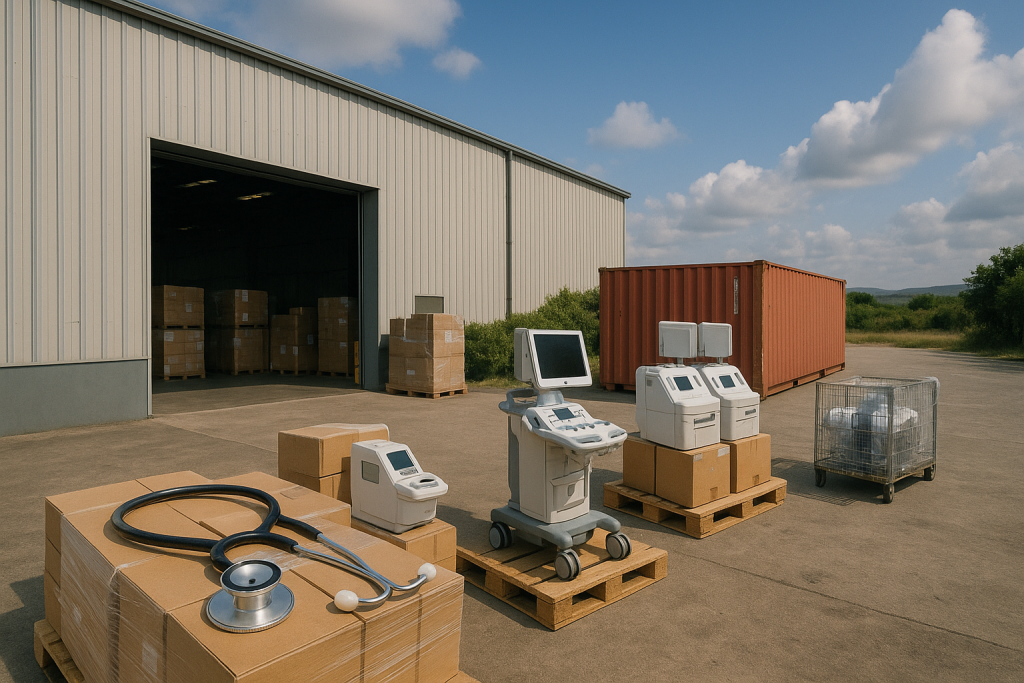
Foreign suppliers looking to enter Zambia’s medical equipment market must navigate a complex ecosystem of regulations, tax laws, and import procedures. While the country presents a promising opportunity due to growing healthcare needs, non-compliance with regulatory frameworks can delay market entry and trigger penalties.
This guide breaks down the essential steps foreign suppliers need to follow—from securing regulatory approvals and understanding import rules to optimizing taxes and setting up a compliant business structure in Zambia.
Understanding Zambia’s Regulatory Landscape
Medical equipment in Zambia is regulated by a network of government bodies:
-
Zambia Medicines Regulatory Authority (ZAMRA): Oversees the registration, import, and quality control of all medical devices.
-
Health Professions Council of Zambia (HPCZ): Issues facility licenses and monitors compliance of healthcare institutions.
-
Zambia Revenue Authority (ZRA): Manages import tariffs, VAT, and customs through its ASYCUDA World platform.
Foreign suppliers must engage with all three to legally place their equipment on the market.
Step 1: Medical Device Registration with ZAMRA
Before supplying equipment in Zambia, a marketing authorization from ZAMRA is mandatory. Medical devices are classified into four categories—Class A (lowest risk) to Class D (highest risk). The process includes:
What You’ll Need:
-
A complete application form** **
-
Samples of the product in its smallest commercial packaging
-
A detailed product dossier covering device specs, usage, storage, and safety data
-
Valid Free Sale Certificates and ISO 13485 documentation
-
Proof of device registration in other countries (especially SADC)
Appoint a Local Responsible Person
Foreign suppliers must appoint a local representative in Zambia—either a company or individual—authorized to liaise with ZAMRA. This person ensures regulatory compliance and manages post-market vigilance.
Step 2: Health Facility and Distribution Licensing
If a supplier wants to open a distribution center or after-sales service unit, HPCZ may require a health facility license.
Basic requirements include:
-
PACRA company registration documents
-
Fire and business permits from the local council
-
A tax clearance certificate from ZRA
-
A lease or proof of premises ownership
Without this license, suppliers cannot legally operate physical locations offering medical services or device support.
Step 3: Business Registration in Zambia
To operate locally, foreign suppliers can either register as:
A Foreign Company
-
Requires at least one Zambian-resident director** **
-
Must appoint a Zambian documentary agent** **
-
Must register with PACRA and ZRA
A Local Subsidiary
-
Minimum share capital: K15,000** **
-
Requires at least two directors, with 50% residency in Zambia
-
Eligible for investment incentives through the Zambia Development Agency (ZDA)** **
Step 4: Taxation and Import Compliance
Import Duties and Tariffs
Zambia offers tax incentives for medical equipment:
-
Duty-free imports for most medical devices
-
VAT zero-rating if devices are supplied directly to hospitals, clinics, or registered medical practitioners
However, import VAT (16%) may apply if conditions are not met.
VAT Registration for Suppliers
Foreign suppliers must register for VAT if:
-
Their taxable supplies exceed K800,000/year or K200,000 in 3 months** **
-
They wish to claim input VAT on imported goods
Step 5: Import Procedures and ASYCUDA
Zambia uses the ASYCUDA World system to manage customs declarations. The import process involves:
-
Submitting a pre-arrival declaration
-
Attaching documents: commercial invoice, bill of lading, permits
-
Tax self-assessment and payment
-
Physical inspection (if flagged)
-
Release and delivery of goods
Special Requirements for Medical Devices
-
Import permits from ZAMRA** **
-
Compliance with GMP standards** **
-
Correct labeling and packaging (English is required)
Large consignments (above USD 2,000) must be cleared via a licensed clearing agent.
Step 6: Post-Market Compliance and Vigilance
Annual Retention
Every device must pay an annual retention fee to maintain its market authorization. The renewal process begins 180 days before expiry.
Vigilance Reporting
Suppliers are required to:
-
Report product defects or adverse events to ZAMRA
-
Appoint a qualified person for vigilance (QPV)
-
Keep records of device distribution, performance, and corrective actions
Strategic Tips for Foreign Suppliers
1. Start with Low-Risk Devices
Begin with Class A or B devices to test regulatory waters before scaling up.
2. Invest in Local Partnerships
A reliable Zambian partner helps with compliance, distribution, and relationship building.
3. Use ZDA Incentives
By registering with the Zambia Development Agency, you gain:
-
0% duty for 5 years
-
Accelerated depreciation
-
Access to industrial yards and Multi-Facility Economic Zones (MFEZs)
4. Build a Strong Compliance Team
Stay ahead of regulations by hiring or consulting local experts in:
-
Regulatory affairs
-
Taxation
-
Customs clearance
Conclusion
Supplying medical equipment in Zambia is a lucrative but highly regulated venture. Foreign suppliers must be prepared to handle device registration, appoint local representatives, follow strict customs protocols, and maintain compliance throughout the product lifecycle.
By understanding the systems in place—ZAMRA, HPCZ, ZRA, and PACRA—and leveraging investment incentives, suppliers can unlock access to a growing market with increasing demand for quality healthcare infrastructure.
With careful planning, a strong local presence, and expert guidance, Zambia’s medical equipment market can be both compliant and profitable for foreign investors.