.png)
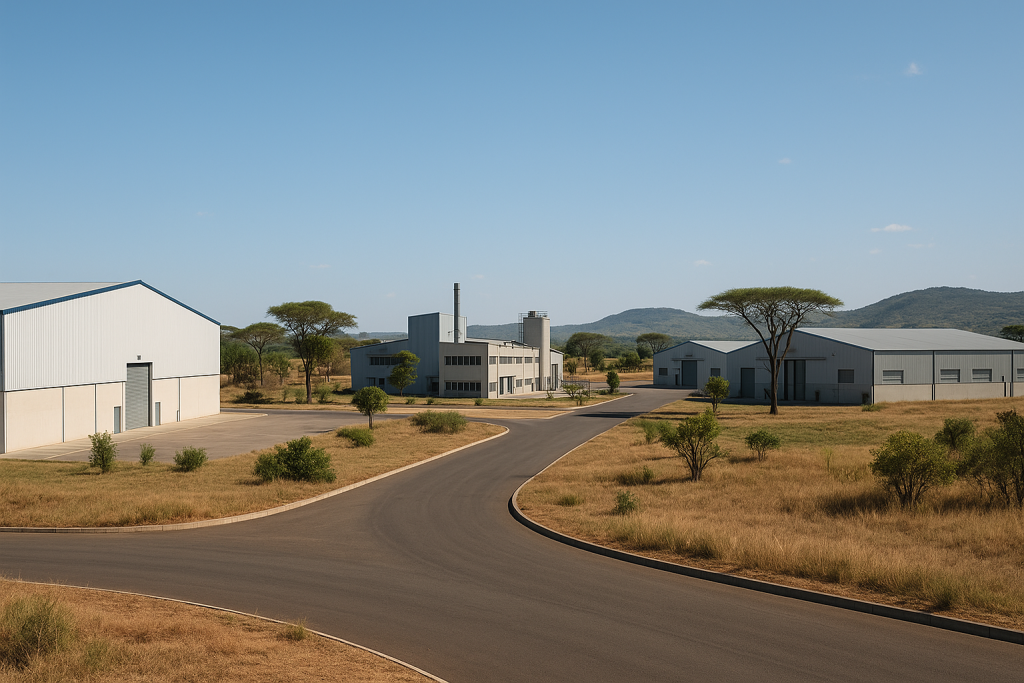
Foreign investors eyeing industrial parks in Sub-Saharan Africa often ask one question first: “Is Zambia a safe market for foreign-owned industrial parks?” The short answer is yes—provided you structure your entry around Zambia’s Multi-Facility Economic Zones (MFEZs) and plan for the country’s unique infrastructure and regulatory realities. This guide unpacks political stability, land rules, infrastructure gaps, incentives, and real-world return on investment (ROI) so you can make an informed, data-driven decision.
1. Zambia’s Political and Economic Bedrock
Since introducing multi-party elections in 1991, Zambia has enjoyed peaceful transfers of power and a predictable macro-economic policy environment. The current administration’s anti-corruption drive and emphasis on public-sector transparency have pushed investor confidence upward. Foreign direct investment rebounded to USD 108 million in 2023 after a COVID-era dip—still below pre-2020 averages, but trending positive.
What this means for you: Political risk is comparatively low for the region, but governance reforms are still bedding in. Build compliance and transparency clauses into all local-partner contracts to stay ahead of evolving regulations.
2. Why MFEZs Give Foreign Industrial Parks an Edge
2.1 Investment Thresholds & Eligibility
-
USD 250 k minimum capital for any foreign-owned company inside an MFEZ
-
USD 500 k for projects outside priority sectors seeking fiscal incentives
-
USD 50 k for Zambian-owned firms (an important detail when structuring local partnerships)
2.2 Stand-out Tax Incentives
For the first 10 years:
-
0 % corporate income tax** **
-
0 % withholding tax on dividends (export profits)
-
0 % customs duty on capital equipment Years 11-15 phase in taxes at gradually increasing rates (50 % → 75 % → standard rate).
2.3 Market-Access Sweet Spot
Operating in an MFEZ positions you on Zambia’s north-south and east-west trade corridors while unlocking tariff-free access to COMESA, SADC, and AfCFTA—a consumer base topping one billion.
3. Navigating Zambia’s Land-Ownership Maze
Zambia’s Lands Act restricts freehold ownership to citizens or companies that are ≥ 75 % locally owned. Foreign investors therefore secure land through one of two routes:
-
Leasehold (up to 99 years) approved by the President or Zambia Development Agency (ZDA).
-
Locally incorporated SPV where Zambian partners hold at least 25 % equity.
Pro tip: Draft shareholder agreements giving foreign principals preferential dividend rights and veto protection while still meeting the 25 % Zambian-ownership threshold.
4. Infrastructure: Know the Gaps Before You Build
4.1 Success Stories
The government-run Lusaka South MFEZ (LS-MFEZ) has poured money into 20 km of internal roads, a 33 kV power backbone, and on-site water treatment—posting a 44 % YoY profit jump in 2022.
4.2 Persistent Pain Points
-
Power reliability outside LS-MFEZ: Load-shedding can reach six hours on bad days. Budget for solar PV or diesel redundancy if you locate elsewhere.
-
Water supply: Current bulk water provision in some zones falls 20 % below demand. Engage with utility companies early.
-
Road bottlenecks: Major arteries like Tokyo Way handle more traffic than they were built for; oversized loads may require police escort or night moves.
4.3 Mitigation Playbook
-
Allocate 10-15 % of capex for private utilities (rooftop solar, boreholes, fiber) from day one.
-
Negotiate bulk-tariff MoUs with the national utility (ZESCO) during the ZDA approval stage.
-
Partner with logistics firms experienced in Zambian customs to minimise port-to-park delays.
5. Returns You Can Bank On
| Indicator (LS-MFEZ) | 2021 | 2022 | Δ YoY | | Profit before tax (ZMW m) | 4.98 | 7.19 | ▲ 44 % | | Dividend declared (ZMW m) | – | 1.2 | 1st in 10 yrs | | Jobs created (cumulative) | 24 310 | 28 526 | ▲ 17 % |
With 21 operational tenants contributing roughly 3 % to national GDP, the LS-MFEZ demonstrates that a well-managed zone can move from heavy infrastructure spend to dividend payouts within a decade.
6. Risk Radar: What Could Go Wrong?
| Risk Category | Impact | Likelihood | Counter-Measure | | Power outages | Production downtime | Medium | On-site solar + diesel hybrid, power-cost escrow | | Regulatory delays | Startup drag | Medium-High | Retainer with Zambian legal counsel, pre-filing meetings | | Corruption & compliance | Fines, project halt | Medium | Independent audits, transparent procurement | | Security (theft/vandalism) | Asset loss | Low-Medium | Park perimeter fencing, armed police pos |
7. Step-by-Step Entry Roadmap
-
Feasibility: Commission market & technical studies (4-6 weeks).
-
Structure: Register Zambian SPV; draft shareholder & land-lease agreements (2-4 weeks).
-
Incentive Application: Submit project plan to ZDA for MFEZ status and IPA (Investment Promotion & Protection Agreement) approval (4-8 weeks).
-
Regulatory Compliance: Acquire environmental clearance (ZEMA), PACRA certifications, and utility connection guarantees (8-12 weeks).
-
Groundbreaking: Mobilise EPC contractor; integrate backup power and water infrastructure from day one.
-
Operational Go-Live: Launch phased operations; export-ready in 12-18 months.
8. Is Zambia Right for Your Industrial Park?
Choose Zambia if you
-
Aim to serve regional export markets from a politically stable hub.
-
Need world-class tax holidays to shorten payback periods.
-
Have capital headroom to self-fund critical infrastructure and navigate bureaucratic speed bumps.
Look elsewhere if you
-
Require turnkey utilities at plug-and-play levels on day one.
-
Lack local partners or the patience for multi-agency approvals.
Conclusion
For investors prepared to blend robust due diligence with proactive infrastructure spending, Zambia’s MFEZ program delivers a compelling value proposition: zero corporate tax for a decade, duty-free capex, and tariff-free access to regional markets—all anchored in one of Africa’s steadier political climates. Structured correctly, foreign-owned industrial parks can—and do—generate solid ROI while contributing to Zambia’s wider industrialisation goals.