.png)
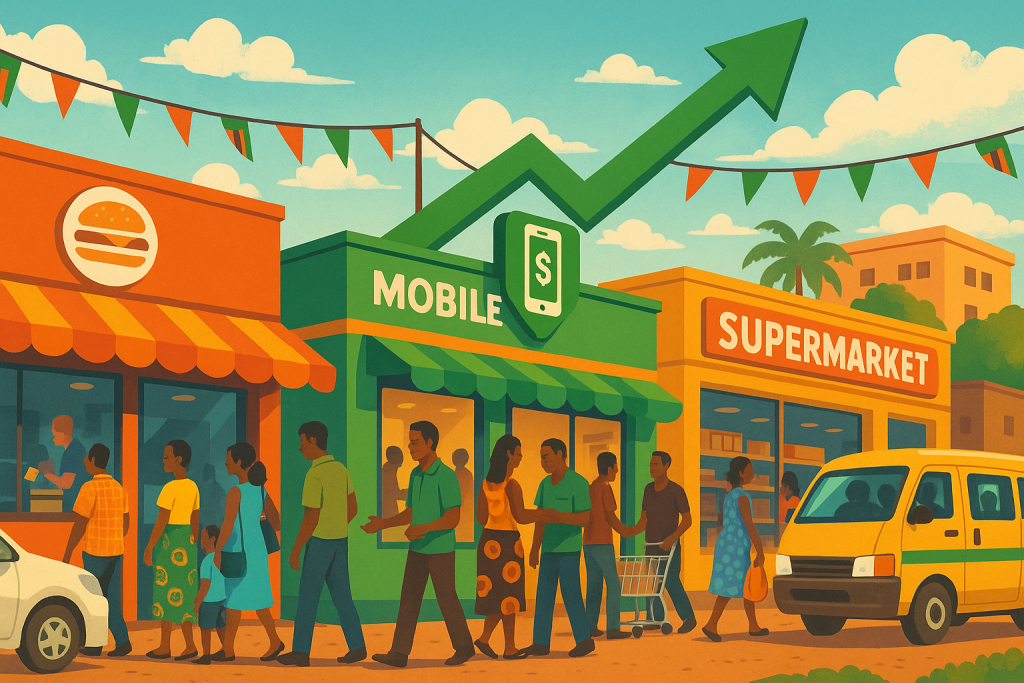
Zambia’s economy is shifting into high gear. After a tough drought cycle, the Ministry of Finance projects real GDP growth of roughly 6 percent in both 2025 and 2026. That pace outstrips the global franchise industry’s 2.4 percent growth forecast and sets the stage for a bumper year for entrepreneurs who partner with proven brands. Urban centres such as Lusaka, Kitwe and Ndola already host a young, digitally savvy consumer base. Combine that with stronger disposable incomes and you have the key ingredients for a franchise boom.
1. Why 2025 Is a Break‑Out Year for Zambian Franchising
-
Macroeconomic tail‑winds. Lower inflation, currency stability and a friendlier debt profile are rebuilding consumer confidence.
-
Policy support. The Zambia Development Agency continues to waive customs duty on selected equipment for new franchise outlets.
-
Pent‑up demand. Lockdown‑era habits—online ordering, home delivery, cash‑less payments—are now entrenched, creating openings for tech‑enabled brands.
2. Food & Beverage: Quick‑Service Brands Lead the Charge
International favourites surge ahead
-
KFC opened its first Lusaka store in 2011 and now runs seven outlets nationwide. Consistent product quality and aggressive drive‑through expansion keep the Colonel in pole‑position.
-
Chicken Inn, part of Zimbabwe’s Simbisa group, is blanketing transit hubs and university precincts with value combos that resonate with price‑sensitive diners.
-
Donatos and Vocelli Pizza (initial fees: US $200 000 and US $100 000 respectively) report double‑digit same‑store sales on the back of Zambia’s growing middle class and taste for Western‑style casual dining.
Beverage & snack concepts gather steam
Varun Beverages’ upcoming “Simba Munchiez” plant (launching April 2026) shows how strong snack demand has become. The US $7 million facility will supply PepsiCo‑branded chips and extruded snacks to a market already worth about US $156 million.
Key takeaway: QSRs thrive when they blend global standards with local flavours—think peri‑peri wings or nshima‑friendly combo meals.
3. Retail & Everyday Services: Hardware, Groceries and Gyms
Hardware & DIY
Ace Hardware requires about US $350 000 in total investment, yet charges no ongoing royalty. Instead, franchisees share in year‑end purchasing rebates from the brand’s US $9.5 billion buying power.
Supermarkets & convenience stores
Botswana‑based chains and regional groups view Zambia’s under‑served neighbourhoods as prime territory for compact grocery formats that focus on fresh produce and ready‑to‑eat meals.
Fitness & wellness
-
Anytime Fitness (from US $225 000) leverages a 24/7, key‑fob model ideal for busy urban professionals.
-
Pure Fitness (about US $500 000) deploys state‑of‑the‑art equipment plus a low‑commitment monthly plan that appeals to Gen‑Z members.
4. Tech‑Enabled & E‑Commerce Franchises: Riding the Digital Wave
Mobile money & payment gateways
Zambia now counts more mobile‑money wallets than bank accounts. Fintech franchises that embed QR payments, bill aggregation and SME merchant services can tap transaction fees that scale with user adoption. Startup costs range from US $25 000 to US $250 000, depending on whether the franchisor supplies the core platform.
Last‑mile delivery networks
E‑commerce penetration jumped from 8 percent in 2021 to 14 percent in 2024. Courier and dark‑kitchen franchises that guarantee sub‑60‑minute fulfilment enjoy robust unit economics, especially in Lusaka’s high‑density districts.
5. Hospitality & Specialised Services: High‑Value Niches
Hotels & serviced apartments
Luxury chains—including IHG, Radisson and Marriott—have flagged Lusaka and Livingstone for pipeline projects. Franchise contracts typically require US $1–3 million in equity plus access to development finance.
Diagnostic labs, beauty schools & dance studios
| Segment | Typical Total Investment | Demand Driver | | Diagnostic labs | US $120 000–US $400 000 | Surge in preventive healthcare & insurance uptake | | Beauty schools | US $60 000–US $150 000 | Booming cosmetology careers among youth | | Dance studios | US $40 000–US $90 000 | Rising interest in lifestyle & creative arts |
Tip: These niche concepts often include turnkey site design and curriculum support, lowering operational risk for first‑time franchisees.
6. Investment Snapshot: What It Costs to Join the 2025 Boom
-
Entry‑level fast‑food kiosks: US $10 000–US $50 000** **
-
Mid‑tier service brands (gyms, hardware): US $200 000–US $500 000** **
-
Premium hospitality & healthcare: US $1 million+** **
Franchisors typically expect a 5–8 percent royalty on gross sales plus a 1–3 percent marketing levy. Payback periods average 30–48 months for well‑executed sites.
7. How to Select the Right Franchise for Zambia’s Market
-
Map unmet demand. Start with district‑level income and foot‑traffic data, not brand fame.
-
Scrutinise support. Evaluate training modules, site‑selection guidance and supply‑chain reliability.
-
Stress‑test finances. Build cash‑flow models that factor in exchange‑rate swings and utility costs.
-
Prioritise localisation. Menus, price points and marketing must resonate with Zambian tastes and cultural norms.
-
Plan for scale. Choose brands willing to grant multi‑unit or area‑development rights as your competence grows.
Conclusion: Franchise Futures Look Bright
With GDP on the upswing, supportive policy signals and a consumer base hungry for quality and convenience, franchising stands out as one of Zambia’s most dynamic business sectors for 2025 and beyond. Whether you favour crispy chicken, smart lockers or boutique hotels, the common thread is clear: pair international best practice with local insight and you will ride the country’s next growth wave.